
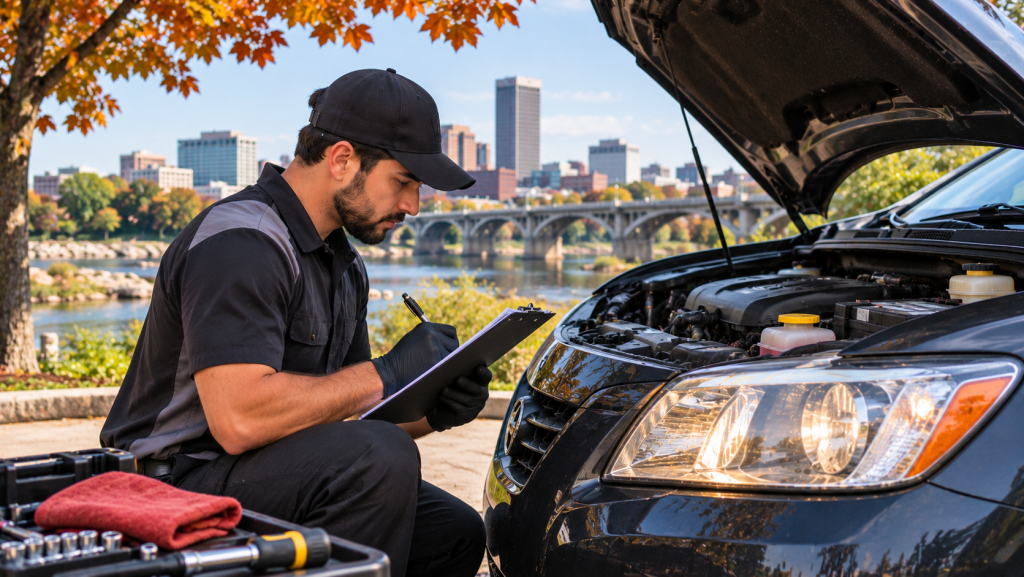
Few things interrupt a Richmond week like a rejection sticker. You pull in expecting a quick stop, and instead you leave with a list of defects, a deadline and a second trip. The good news is that most rejections come from a short list of ordinary items, and many of them can be spotted at home in a few minutes. This guide explains what inspectors look at, the common reasons vehicles get rejected, a simple checklist you can run before you go, what to do if your car is rejected and how a mobile mechanic can help you prepare. If you are searching for Virginia car inspection tips in Richmond, here is a practical overview.
What Inspectors Look At
The Virginia State Police oversee the state’s vehicle safety inspection program, and the inspection follows an official procedure and manual. According to the State Police, the inspection covers areas such as:
- Brakes, including the parking brake.
- Headlights, other lights and signal devices, including rear license plate illumination.
- Steering and suspension.
- Tires, wheels and rims.
- Mirrors and horn.
- Windshield and other glass, plus wipers and the defroster.
- Exhaust system and the air pollution control system on later model vehicles.
- Hood latch and under hood components, plus brake and power steering fluid levels.
- Driver’s seat, seat belts and the airbag system or readiness light.
- Driver’s side doors, the fuel system and the floor pan.
Requirements, standards and procedures can change, and details vary by vehicle, so use this article as a general guide only. For the exact rules, check the Virginia State Police website or the official inspection manual, or ask the inspection station about your vehicle.
Common Reasons for a Rejection Sticker
Lights
Burned out bulbs are among the easiest problems to prevent. Check low and high beams, brake lights, turn signals, hazard lights, tail lights and the light that illuminates the rear license plate. Cloudy headlight lenses and cracked lenses can also cause trouble, because they reduce how well you see and are seen.
Tires and wheels
- Tread. Look at the wear bars in the grooves or use a tread depth gauge, and ask the station what is acceptable.
- Damage. Bulges, cuts, exposed cords and cracked sidewalls are warning signs.
- Wheels and rims. Cracks, bends and missing lug nuts matter.
- Pressure. Set pressure to the sticker on the door jamb, since underinflated tires wear faster.
Brakes
Inspectors look at both the service brakes and the parking brake. Signs of trouble include grinding, squealing, a soft pedal, pulling to one side, vibration when stopping and a parking brake that does not hold. Brakes are a safety system, so repairs belong with a qualified technician. If the pedal ever feels wrong while you drive, slow down safely, pull over when you can and do not keep driving as usual.
Steering and suspension
Looseness, wandering, clunks over bumps, a pull to one side or a bouncy ride can point to worn parts. These parts affect control of the vehicle, so they get a close look. Our post on why your steering feels heavy explains one common symptom and what may be behind it.
Wipers, glass and defroster
Torn or streaking wiper blades, a cracked windshield and a defroster that does not clear the glass can all cause problems. Wiper blades are quick to replace, and a chip is worth having looked at before it spreads.
Horn, mirrors and doors
Test the horn, check that mirrors are present and not cracked, and make sure the driver’s door opens, closes and latches properly.
Exhaust and emission parts
A loud exhaust, a visible leak, rust holes or loose and missing parts can cause a rejection. Exhaust leaks can also let fumes into the cabin, so a hissing or roaring sound from under the car deserves attention. Missing or damaged emission parts under the hood can also be a problem.
Seat belts, airbags and seats
Seat belts need to latch and retract properly, and the airbag readiness light should behave normally when you start the car. A warning light that stays on is worth checking before inspection day.
Fluids and the hood latch
The inspection includes the hood latch and the levels of brake and power steering fluid. Look under the hood and top off fluids according to your owner’s manual, and have any leaks looked at.
A Ten Minute Check Before You Go
- Lights. With a helper, or by reflecting off a wall or window, test every light, including the rear plate light.
- Tires. Check pressure, tread and sidewalls.
- Wipers and washers. Test them and look at the rubber.
- Horn. Press it once.
- Mirrors and glass. Look for cracks and damage.
- Seat belts. Buckle and unbuckle each one, and check that they retract.
- Dashboard. Start the car and watch for warning lights, including the airbag light.
- Brakes. Notice pedal feel and noises, and test the parking brake on a safe, gentle slope.
- Under the hood. Check the brake and power steering fluid levels, and make sure the hood latches securely.
- Under the car. Look for hanging exhaust parts, leaks and listen for unusual noise.
Do not attempt brake or steering repairs unless you know exactly what you are doing. Your owner’s manual explains warning lights, fluid types and bulb types for your vehicle.
Easy Habits That Help You Pass
- Do not wait for the last day. Leave time for repairs if something is found.
- Fix known problems first, such as a noisy brake or a warning light that has been on for weeks.
- Replace wipers and bulbs before the visit.
- Keep up with routine service, since a well maintained car is more likely to pass.
- Be mindful of the battery. A car that will not start on inspection day is a problem of its own, and our guide to the top 10 reasons your car won’t start can help you work through the common causes.
What If You Get a Rejection Sticker?
- Read the list of defects. Make sure you understand each item.
- Ask questions. The inspector can explain what needs to be fixed.
- Get the repairs done. You can choose a shop or a mobile mechanic for them.
- Return for reinspection within the time allowed. According to the Virginia State Police, defects must be corrected and the vehicle reinspected within 15 days, and driving with a defect still present can lead to a summons. Confirm the current rules with the station or the State Police.
- Get a second opinion if you are unsure. A technician can confirm whether a repair is needed.
How a Mobile Mechanic Can Help You Prepare
The simplest way to avoid a rejection is to find problems before you go. A mobile mechanic can come to your home or workplace in Richmond, check lights, tires, wipers, fluids, brakes and the battery, scan for warning lights and take care of smaller repairs on site, such as bulbs, wiper blades and some brake service. That matters because many rejections come down to items like these. Some work, such as certain exhaust repairs, larger steering and suspension jobs or anything needing a lift, may need a shop, and a good technician will tell you honestly what can be done where you are. Keep in mind that the official inspection is performed at an approved inspection station, so a pre inspection check is a way to get ready, not a replacement for it.
Quick Summary
- Virginia inspections cover brakes, lights, steering, suspension, tires, glass, exhaust, seat belts and more.
- Burned out bulbs, worn tires, brake problems and worn wipers are common and often preventable.
- A ten minute check at home can catch most easy problems.
- If your car is rejected, fix the defects and return within the time allowed.
- Many pre inspection repairs can be done at your home, while some need a shop.
A little preparation can turn inspection day into a quick stop. If you would like help getting ready, visit the Mobile Mechanic Pros of Richmond homepage to learn more, or contact us to schedule a visit before your car is due.